

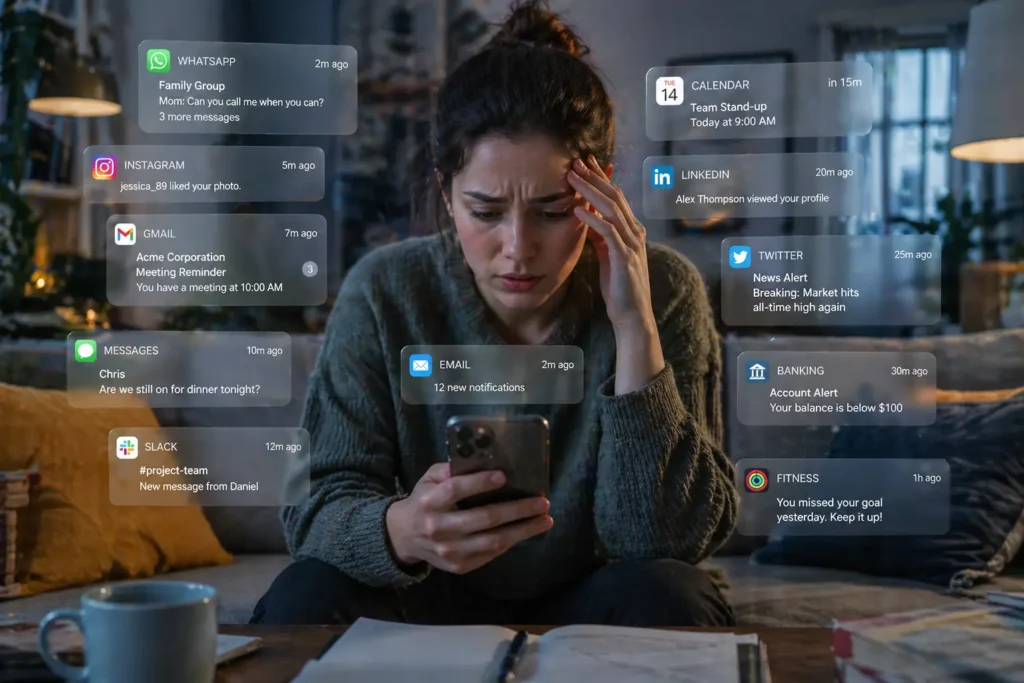
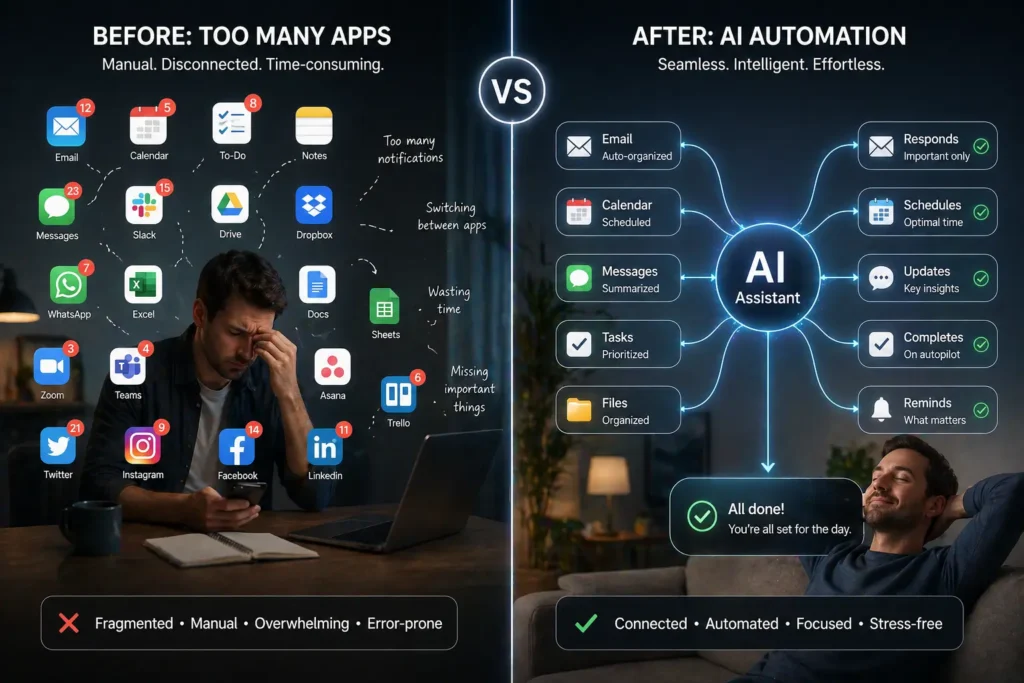
Think about how often you check your phone each day. From the moment you wake up, you scroll through messages, emails, and apps. By the end of the day, your screen time is higher than you expected. I have noticed this in my own routine as well. Even for simple tasks, I have to unlock my phone, open multiple apps, and go through distractions. Over time, this constant use starts to feel tiring and less efficient.
Many people now face the same problem. Too many notifications, too much screen time, and too much dependency on apps. This is one of the key reasons why tech giants envision a future beyond smartphones. Companies like Apple, Google, Meta, and Microsoft are building new technologies to reduce screen dependence and make interactions more natural. This raises an important question
Key Takeaways
- Smartphones are losing dominance due to AI and new interfaces.
- Tech giants are building ecosystems, not just devices.
- AR glasses are emerging as a strong alternative to smartphones.
- AI assistants may reduce the need to open apps manually.
- The future points to a connected, screen-light experience.
what will replace smartphones, and how will it change the way we live and work?
Why the Smartphone Dominance Is Slowly Weakening
Smartphones are still important, but their growth is slowing.
Why This Shift Is Gaining Momentum
- Many users now upgrade smartphones less often than before, showing that innovation has slowed.
- Industry experts expect AI and AR technologies to grow rapidly over the next decade.
- Tech companies are investing heavily in devices that reduce screen dependence.
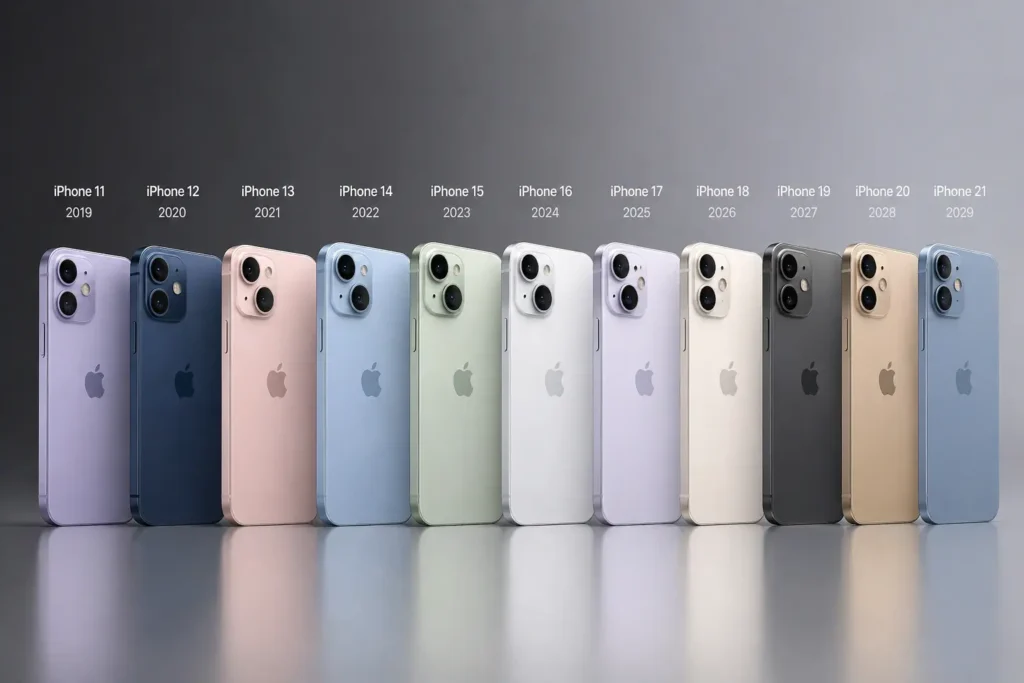
Hardware innovation has plateaued.
New smartphones offer only small upgrades. Faster chips and better cameras are useful, but they do not change how we use devices.
Wearables and ambient devices are becoming more capable
Devices like smartwatches and earbuds now handle many daily tasks. They track health, give notifications, and connect with AI tools.
AI is changing expectations
Users now expect faster and smarter responses. They want devices that understand needs and act quickly, not just apps to open.
New interfaces are emerging
Voice, gestures, and eye tracking are becoming common. These reduce the need to touch a screen.
The Shift Begins: How Tech Giants Are Preparing for Life After Smartphones
Tech companies are investing heavily in the next phase of technology.
Apple’s vision: A world led by spatial computing
Apple is focusing on spatial computing with devices like Vision Pro. This allows users to interact with digital content in a 3D environment.
Google’s approach: Ambient computing and AI everywhere
Google is building systems where AI works in the background and helps users without constant input.
Meta’s strategy: Glasses at the center of human interaction
Meta is developing smart glasses and believes wearables will replace traditional screens over time.
Samsung’s ecosystem play
Samsung is connecting phones, wearables, and smart home devices into one system.
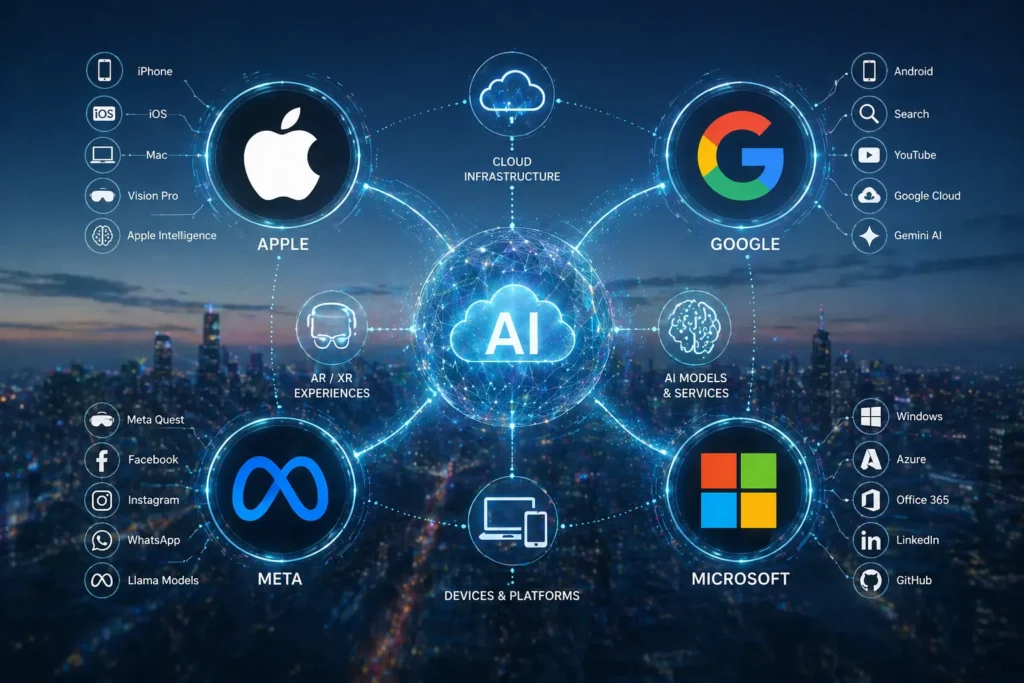
These companies are not just building devices. They are building ecosystems.
Key Predictions at a Glance
- Smartphones will remain, but they will lose dominance.
- AI will handle more tasks automatically.
- AR glasses will become more common over time.
- Connected ecosystems will matter more than single devices.
Consumer Behavior Is Accelerating the Shift
User behavior is also changing quickly.
People are tired of constant screen time
Many users want to reduce screen usage and avoid digital fatigue.
The desire for seamless connectivity is increasing
Users expect all devices to work together without effort.
Younger generations prefer immersive experiences
AR and VR provide more engaging experiences than traditional screens.
Users now prefer convenience over constant interaction.
Augmented Reality Glasses: The Most Likely Successor to Smartphones
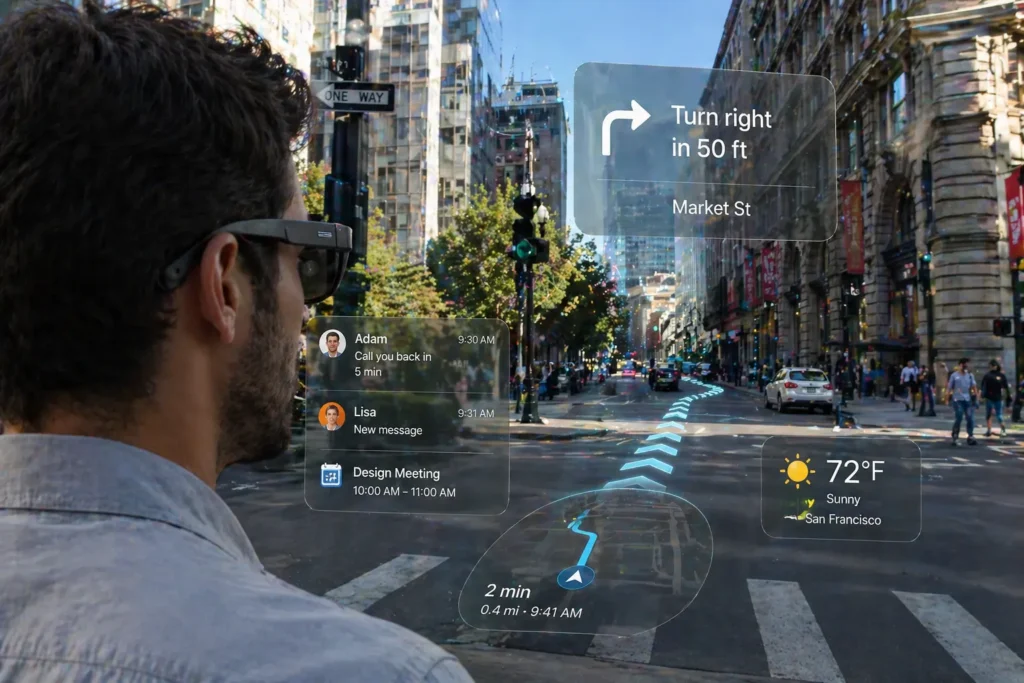
AR glasses are considered one of the strongest candidates for the future.
How AR glasses will reshape daily life
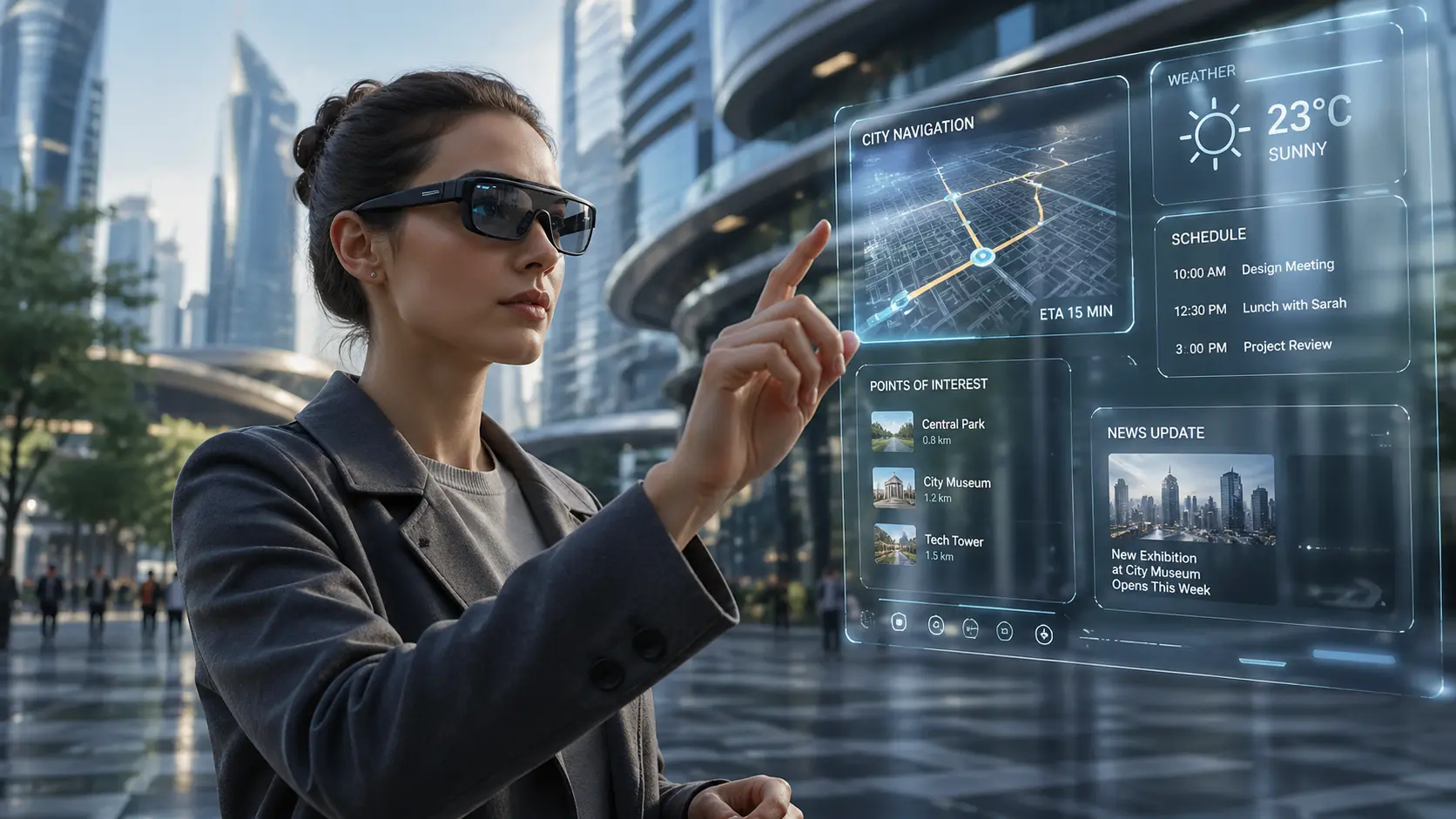
Users can see directions, messages, and reminders directly in their field of view without checking a phone.
Why AR has the strongest potential
They are hands-free, always available, and fit naturally into daily routines.
Spatial Computing: The Evolution of Immersive Interfaces
Spatial computing blends digital content with the real world.
What makes spatial computing so transformative?
Users can interact with digital objects in real space, making the experience more natural.
The biggest players behind spatial computing
Apple, Microsoft, and Meta are leading this space.
AI Assistants and Ambient Intelligence: The Invisible Interface
AI is becoming the center of future technology.
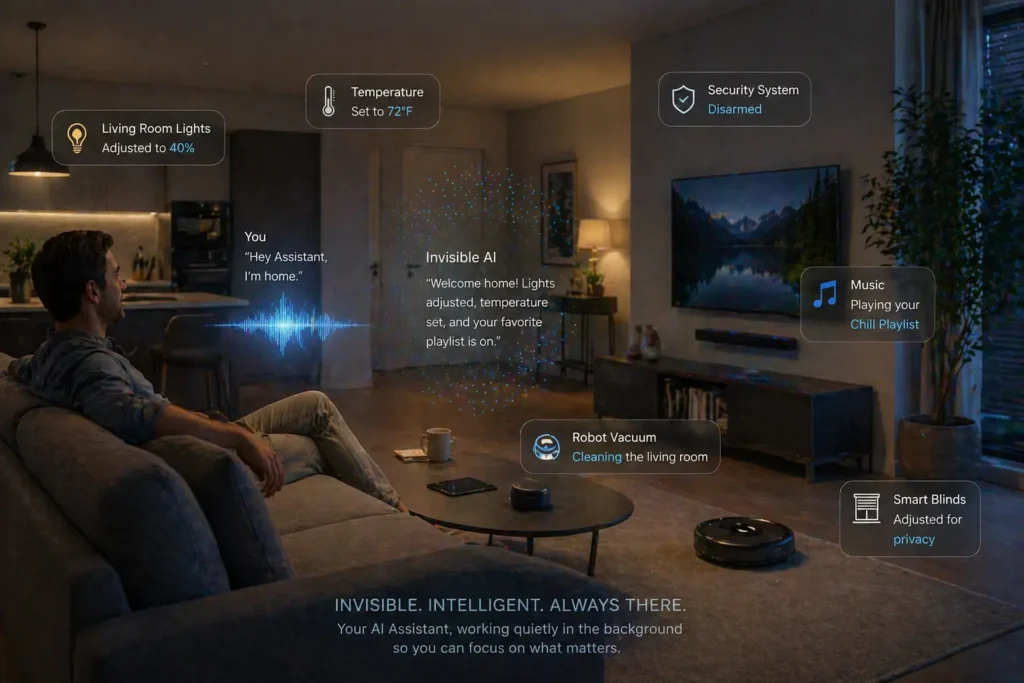
From voice commands to contextual intelligence
AI is evolving to understand context and predict user needs.
How tech giants are reinventing the assistant
AI assistants are becoming proactive and can handle tasks like scheduling, searching, and managing information.
This shows a shift from apps to AI-driven assistance.
The Shift From Apps to AI-Driven Experiences
In the future, users may not need to open apps for every task. AI systems can complete actions automatically, from answering questions to managing schedules and making recommendations. This marks a major shift from app-based interaction to AI-driven experiences.
Foldable & Rollable Displays: The Transitional Stage
Foldable devices are part of the transition.
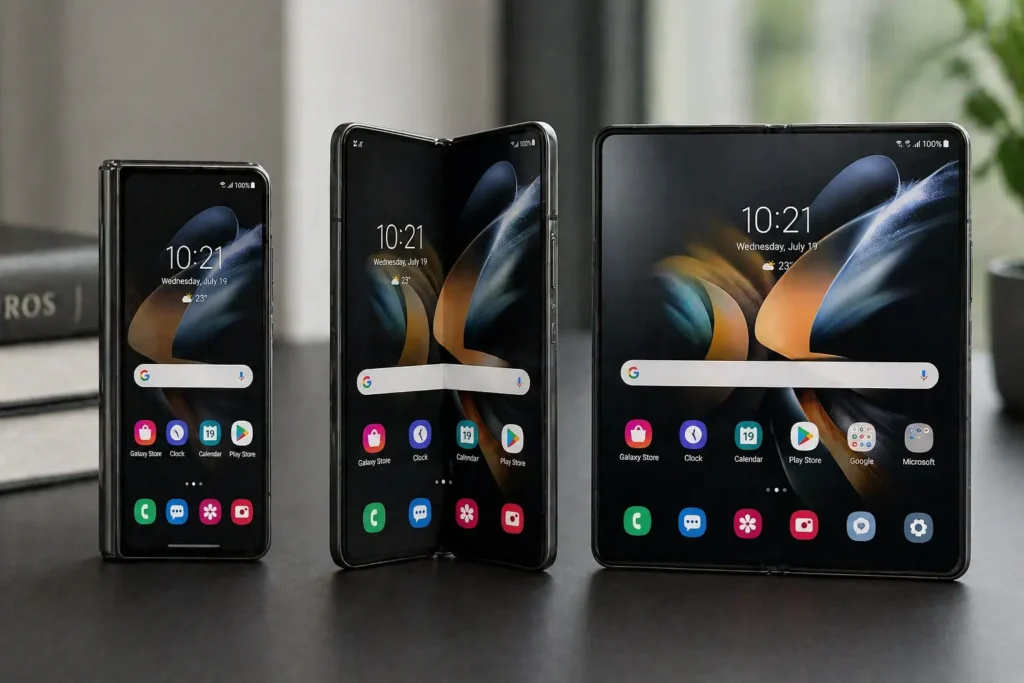
Why foldables matter
They offer larger screens while remaining portable.
The long-term impact
They help users adjust to new types of interfaces.
Neural Interfaces and Brain-Computer Interaction
This technology is still developing.
Who is working on it?
Companies like Neuralink are exploring ways to connect the human brain with computers.
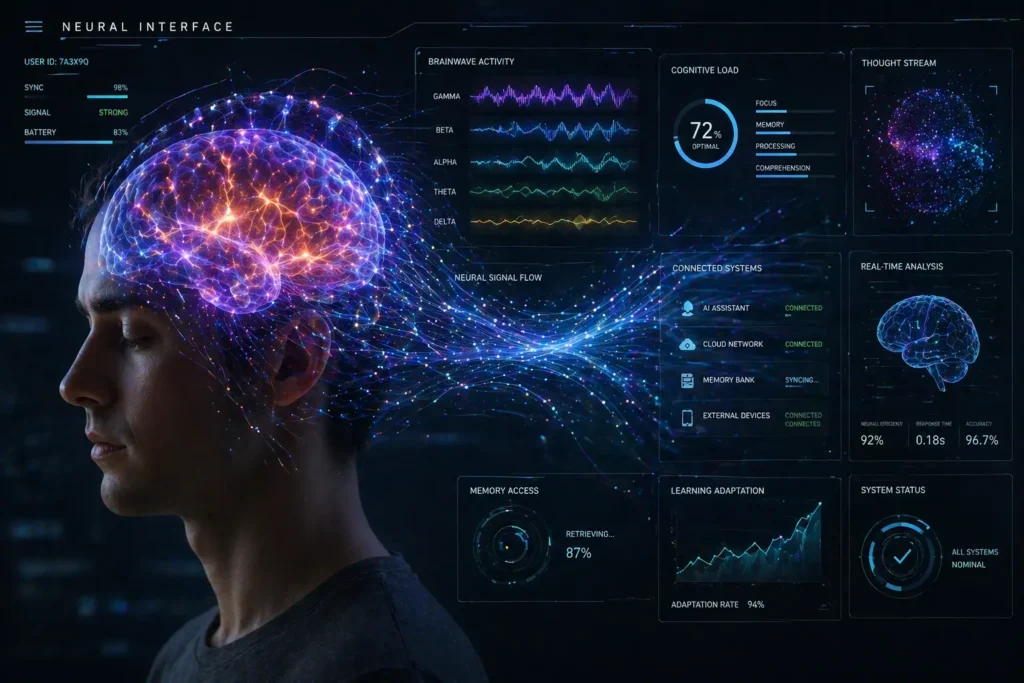
Future of Human-Computer Interaction
Technology is becoming easier to use.
Users may rely more on voice, gestures, and AI instead of typing. Brain-based interaction is also being explored but is still experimental.
Breakthrough Technologies Powering the Transition
Several technologies are driving this change.
Innovations in Display Systems
Advanced displays support AR and VR experiences.
Balancing Local and Cloud Processing
Devices combine local processing with cloud computing for better performance.
Advances in Power Sustainability
Better batteries are needed for wearable devices.
Why These Technologies Matter Together
No single device will replace smartphones.
Instead, a connected ecosystem of devices and AI systems will work together.
How These Technologies May Replace Smartphone Functions
| Technology | Role in the Future | Estimated Timeline |
|---|---|---|
| AI Assistants | Automate tasks and reduce app usage | 0–5 years |
| AR Glasses | Replace screens in daily activities | 5–10 years |
| Spatial Computing | Create immersive digital environments | 5–10 years |
| Brain Interfaces | Enable direct human-device interaction | 10+ years |
How Life Will Look Without Smartphones
Daily life may change significantly.
A Real-Life Glimpse of the Post-Smartphone Future
Imagine starting your day without checking your phone. Your AI assistant reminds you about meetings, your smart glasses show directions in your field of view, and your tasks are managed automatically without opening multiple apps. This is the kind of experience tech companies are trying to build.
Communication will become more natural and invisible
Users may rely on voice or AI instead of typing.
Workspaces will no longer require screens
Virtual screens can appear anywhere.
Navigation and daily assistance become effortless
Directions and reminders may appear automatically.
Entertainment will leave the screen
Games and media may become immersive experiences.
Shopping will become hyper-personalized
AI can suggest products based on real-time preferences.
The Industries That Will Be Disrupted First
Many industries will be affected.
Healthcare
AR and AI can improve diagnosis and treatment.
Education
Students can learn in interactive environments.
Manufacturing & Field Work
Workers can use AR for guidance.
Entertainment & Media
Content will become more immersive.
Retail & E-commerce
Shopping will become interactive.
Transportation
Navigation and safety will improve.
Challenges Standing in the Way of a Post-Smartphone Future
There are still important challenges.
Privacy and surveillance concerns
More devices mean more data collection.
Hardware adoption barriers
New devices can be expensive.
Software readiness
Apps must adapt to new systems.
Social acceptance
Some users may resist change.
Ethical and regulatory challenges
Laws must evolve with technology.
The Timeline: When Will Smartphones Truly Become Secondary?
The transition will happen in stages.
- Short term (0–5 years): Growth of AI and wearables
- Mid term (5–10 years): Wider AR adoption
- Long term (10–15 years): Smartphones become less central
Tech Giants envision a Future beyond Smartphones – Key Predictions
- Smartphones will remain but lose dominance
- AI will handle more tasks
- AR glasses will grow in use
- Devices will become more connected
Final Conclusion
From my experience following technology trends and daily usage patterns, smartphones are still powerful but often overwhelming due to constant notifications and app dependency. The shift toward AI assistants, AR glasses, and ambient computing is not just about innovation, but about solving these real user problems. Based on current industry direction, it is clear that no single device will fully replace smartphones. Instead, we are moving toward a connected ecosystem where multiple devices and AI systems work together to reduce screen reliance. Tech giants are competing to control this next interface, and while smartphones will remain for now, their importance will continue to decline as smarter and more seamless technologies take over.
FAQs
Will smartphones completely disappear in the future?
No, they will likely remain but become less central.
Which company is leading the race to build the post-smartphone ecosystem?
Apple, Google, Meta, and Microsoft are key players.
What will replace smartphones?
A combination of AI, wearables, and AR technologies.
How will AI assistants change life without smartphones?
They will act as proactive agents and handle tasks automatically.
What is the biggest challenge to achieving a post-smartphone world?
Privacy, cost, and adoption are major challenges.
When will AR glasses replace smartphones?
Widespread adoption may take 10–15 years.
