
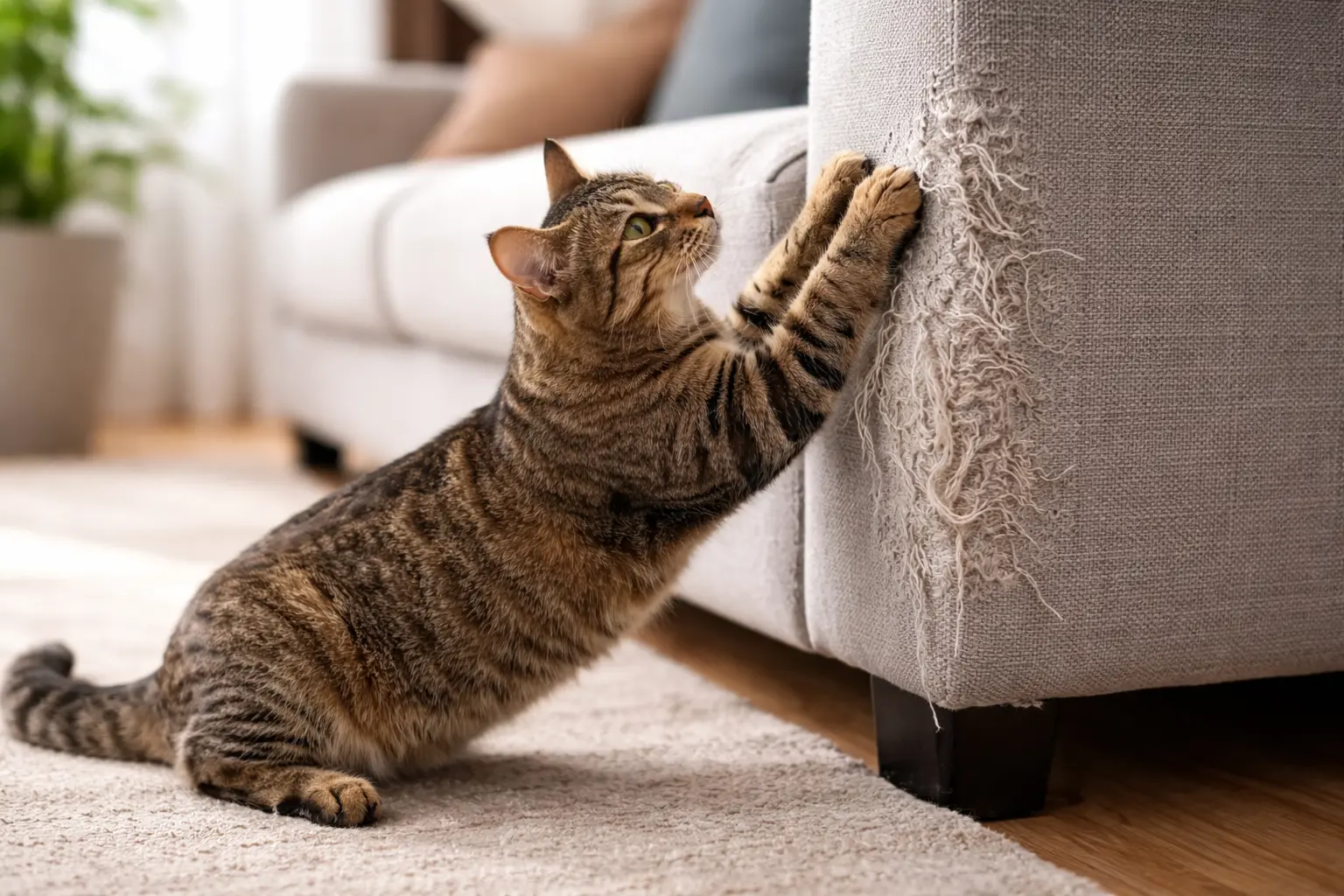

If you have a cat, you have likely seen this problem. You walk into your room and notice your couch scratched again. The corners are damaged, and the fabric looks worn out. It feels frustrating, especially when you have tried different things but nothing seems to work. Many cat owners feel stuck here. They want to protect their furniture, but they also care about their cat and do not want to use harsh methods.
I went through the same situation with my own cat. I tried sprays, covers, and even moved furniture around. At first, nothing worked. Then I learned that scratching is a natural behavior, not bad behavior. Once I changed my approach, things started to improve. In this guide, I will share a simple method that helped me and many other cat owners stop furniture scratching in a safe and effective way.
Quick Takeaway: How to Stop Cats From Scratching Furniture
- Scratching is natural behavior for cats
- Make furniture less attractive with tape, foil, or safe sprays
- Give your cat a tall, stable scratching post
- Reward your cat for using the right spot
- Stay consistent for 7 to 14 days
The best way to stop cats from scratching furniture is to redirect their behavior using scratching posts, safe deterrents, and simple training.
Why Do Cats Scratch Furniture?
Cats do not scratch to be bad. It is a natural instinct.
They scratch to:
- Keep their claws healthy
- Stretch their body
- Mark their space
- Release stress
Cats also have scent glands in their paws. When they scratch, they leave a smell and a mark. This is why they return to the same spot.
Why Having Claws and Scratching is Important to Cats
Scratching is important for your cat’s health.
Claws help cats:
- Climb
- Balance
- Protect themselves
Scratching also helps them feel calm and safe.
You should not stop scratching completely.
You should guide your cat to the right place.
Why Do Cats Scratch the Floor or Carpet?
Some cats like soft surfaces like carpets.
This can happen if:
- The scratching post is not comfortable
- The material is not right
- The post is in the wrong place
Cats choose what feels best. You need to give them a better option.
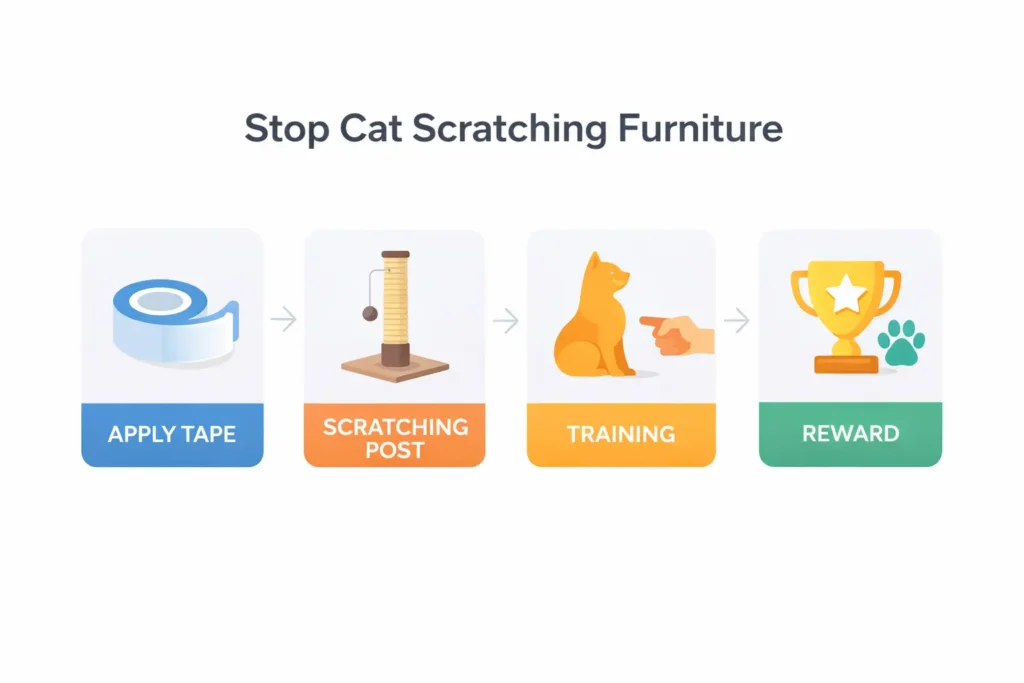
The 4-Step System to Stop Cats From Scratching Furniture
Now that you understand the behavior, follow this simple system.
The 4-Step System at a Glance
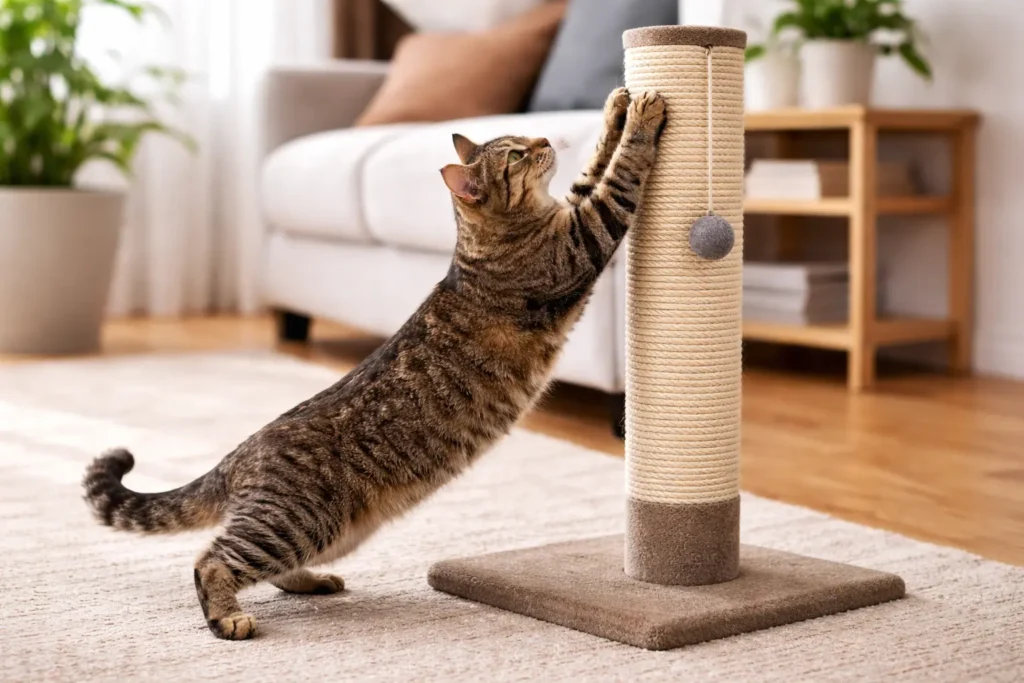
Step 1: Remove the Attraction
Make furniture less attractive.
Use:
- Double-sided tape
- Aluminum foil
- Pet-safe sprays
These are simple and low-cost solutions.
Step 2: Add a Better Option
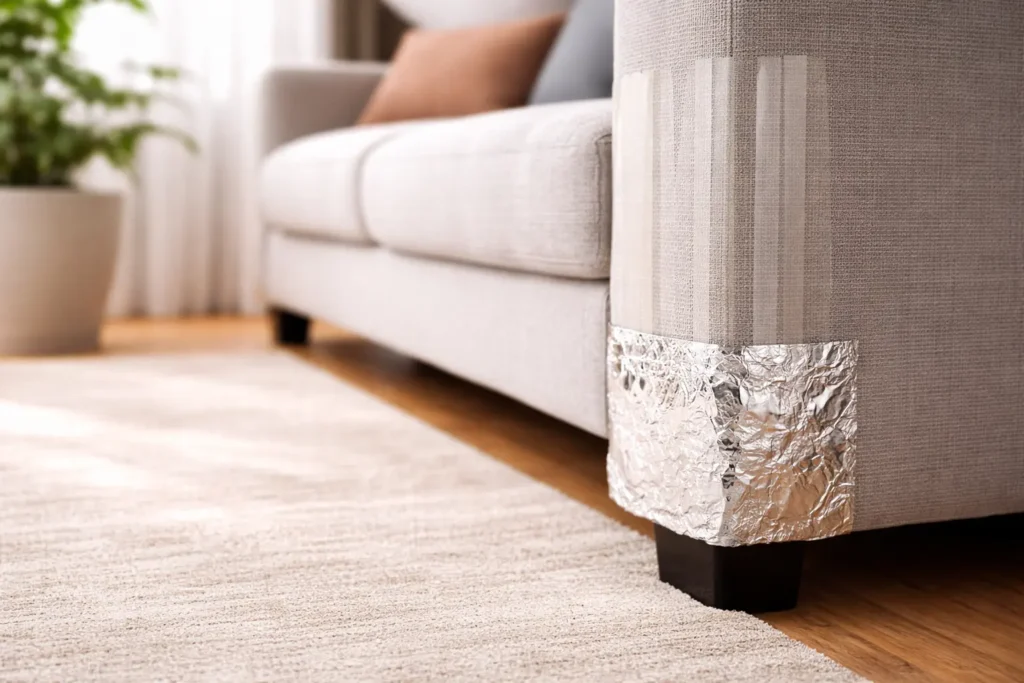
Give your cat a scratching post.
Make sure it is:
- Tall enough for a full stretch
- Strong and stable
- Made of the right material
Options include:
- Sisal rope
- Cardboard
- Carpet
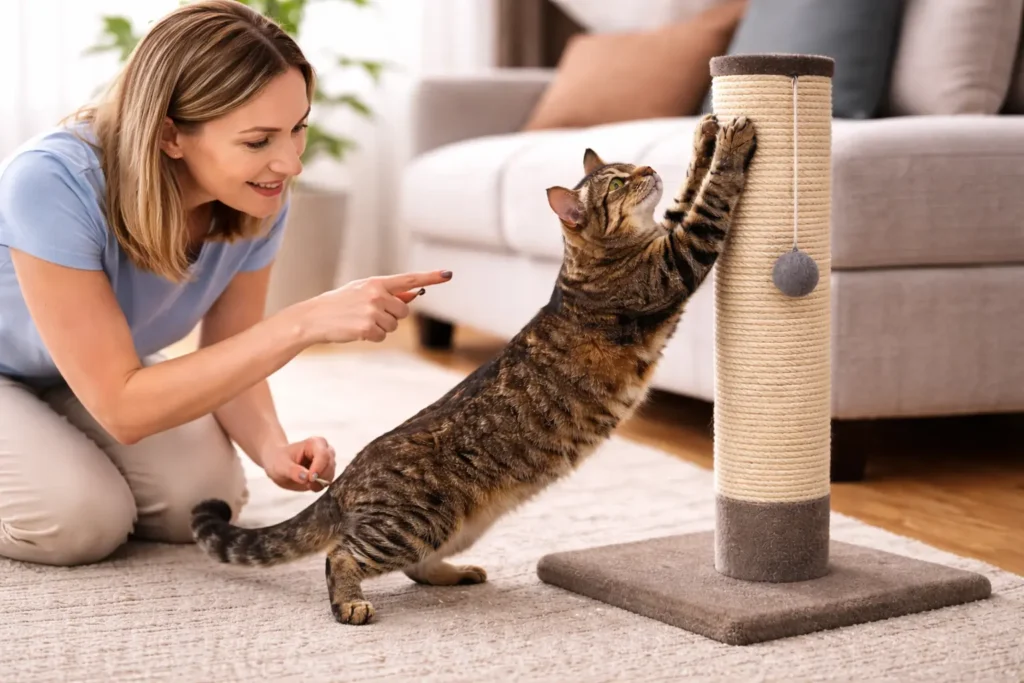
Step 3: Train Your Cat
When your cat scratches furniture:
- Move them to the scratching post
- Let them use it
- Reward them right away
Use treats or praise.
Step 4: Reinforce the Habit
Repeat daily.
Most cats improve within 7 to 14 days with consistency.
Quick Fix Table: Match the Problem With the Right Solution
| Problem | Best Solution |
|---|---|
| Cat scratches couch corners | Place a scratching post right next to the couch |
| Cat ignores the scratching post | Try a different material like sisal, cardboard, or carpet |
| Cat scratches at night | Increase playtime during the day to reduce energy |
| Cat scratches carpet | Use a horizontal scratcher and cover the area |
| Scratching suddenly gets worse | Check for stress, changes at home, or boredom |
What to Do About Your Cat’s Scratching Habits
Guide your cat with patience.
Start with:
- A good scratching setup
- Proper placement
- Daily play and attention
A bored cat scratches more.
How To Stop Cats From Scratching Couches and Other Furniture
Couches are a common target.
To protect them:
- Use covers
- Apply tape on corners
- Place a scratching post nearby
This helps redirect behavior.
How To Keep Your Cat From Scratching Your Home Furniture
This is important if you:
- Rent your home
- Live in an apartment
- Have expensive furniture
Tips:
- Place posts near sleeping areas
- Keep your cat active
- Try different scratchers
1. Find the Right Scratching Post Material
Test different materials:
- Sisal (rough)
- Cardboard (soft)
- Carpet (familiar)
Choose what your cat prefers.
Scratching Post Material Comparison
| Type | Best For | Pros | Cons |
|---|---|---|---|
| Sisal Rope | Most cats | Durable, natural feel, good grip | May feel too rough for some cats |
| Cardboard | Cats that like softer scratching | Affordable, easy to replace | Wears out faster |
| Carpet | Cats used to carpet texture | Feels familiar and easy to accept | Can confuse some cats if furniture feels similar |
2. Put the Scratching Posts in the Right Places
Placement matters.
Put posts:
- Near scratched furniture
- In busy areas
- Near sleeping spots
3. Teach Your Cat To Use Scratching Posts
Training should be simple.
You can:
- Use catnip
- Guide gently
- Reward good behavior
The “Yes” Technique
Reward good behavior.
When your cat uses the post:
- Give treats
- Praise gently
4. Keep Your Cat Away From the Furniture
Make furniture less appealing.
Use:
- Tape
- Foil
- Covers
The “No” Technique
Discourage bad behavior.
- Say “no” calmly
- Redirect to the post
Do not scare your cat.
How To Stop Cats From Scratching the Carpet and Flooring
Use horizontal scratchers.
Also:
- Cover the area
- Place scratchers on top
- Use safe sprays
How to Trim Your Cat’s Nails
Trim nails to reduce damage.
- Use proper clippers
- Trim only the tip
- Stay calm

What NOT to Do
Avoid:
- Punishment
- Yelling or hitting
- Harmful products
- Declawing
Common Mistakes to Avoid
- Punishing your cat instead of redirecting the behavior
- Using only one scratching post in the whole house
- Placing scratchers in quiet corners your cat never uses
- Expecting results in one or two days
- Ignoring your cat’s material and texture preferences
Real-Life Situations and Solutions
If your cat scratches at night
Play more during the day
If your cat ignores posts
Change material or location
If your cat scratches couch corners
Place a post next to it
If scratching increases suddenly
Check for stress:
- Moving
- New pets
- Changes at home
What to Expect: Training Timeline
How to Stop Cats From Scratching Furniture FAQs
Why is my cat scratching more?
Stress or boredom can cause it.
What post is best?
Tall and stable with sisal works best.
Will trimming nails stop scratching?
No, it only reduces damage.
Conclusion
From my experience, the biggest mistake is trying to stop scratching completely instead of guiding it. What worked for me was giving my cat a better option and staying consistent with training. Within a couple of weeks, I saw a clear difference, and my furniture stayed safe. This approach is based on how cats behave, not guesswork. If you follow these steps with patience, you will see results too. Your goal is not to control your cat, but to understand it, and that is what makes the real difference.
