
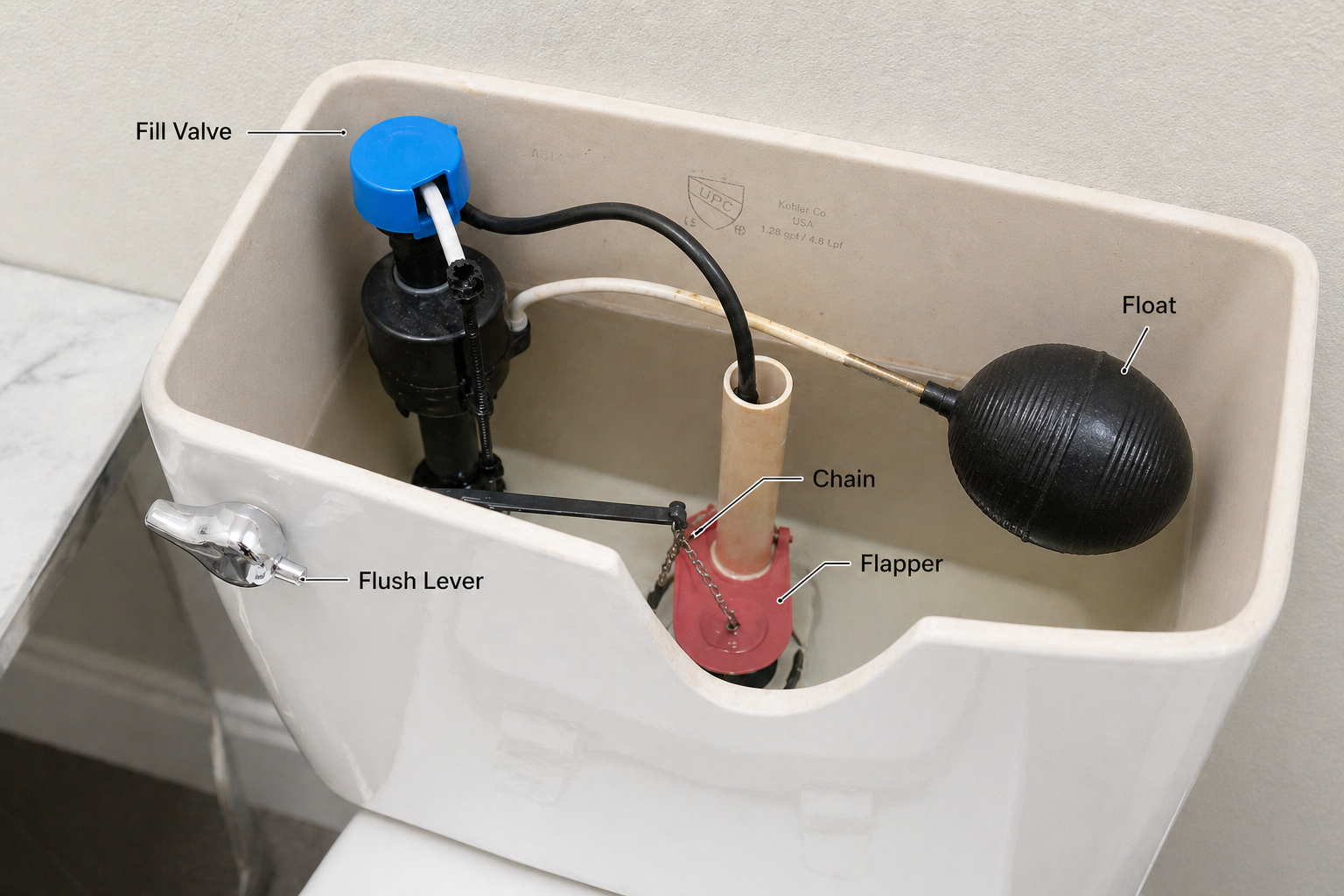

A running toilet may seem like a small issue, but it can quickly become frustrating. The constant sound of water can be annoying, especially at night. At the same time, many people worry about their water bill going up without knowing the exact reason. This problem is very common for both homeowners and renters, and it often creates confusion about what to fix and where to start.
I have faced this issue myself more than once. At first, I thought I needed a plumber, but after checking inside the tank, I realized the problem was simple and easy to fix. In most cases, a running toilet is caused by small parts like the flapper, chain, or float. Once you understand how these parts work, you can fix the problem in minutes. In this guide, I will help you find the cause and fix it step by step, even if you have no plumbing experience.
Key Takeaways
- A running toilet is usually caused by a flapper, chain, float, or fill valve issue.
- Most toilet repairs take less than 30 minutes.
- You can often fix the problem without calling a plumber.
- A running toilet can waste up to 200 gallons of water per day.
- Start by checking the flapper first, because it is the most common cause.
Fix a Running Toilet in 5 Minutes (Quick Answer)
If you want a fast solution, start here:
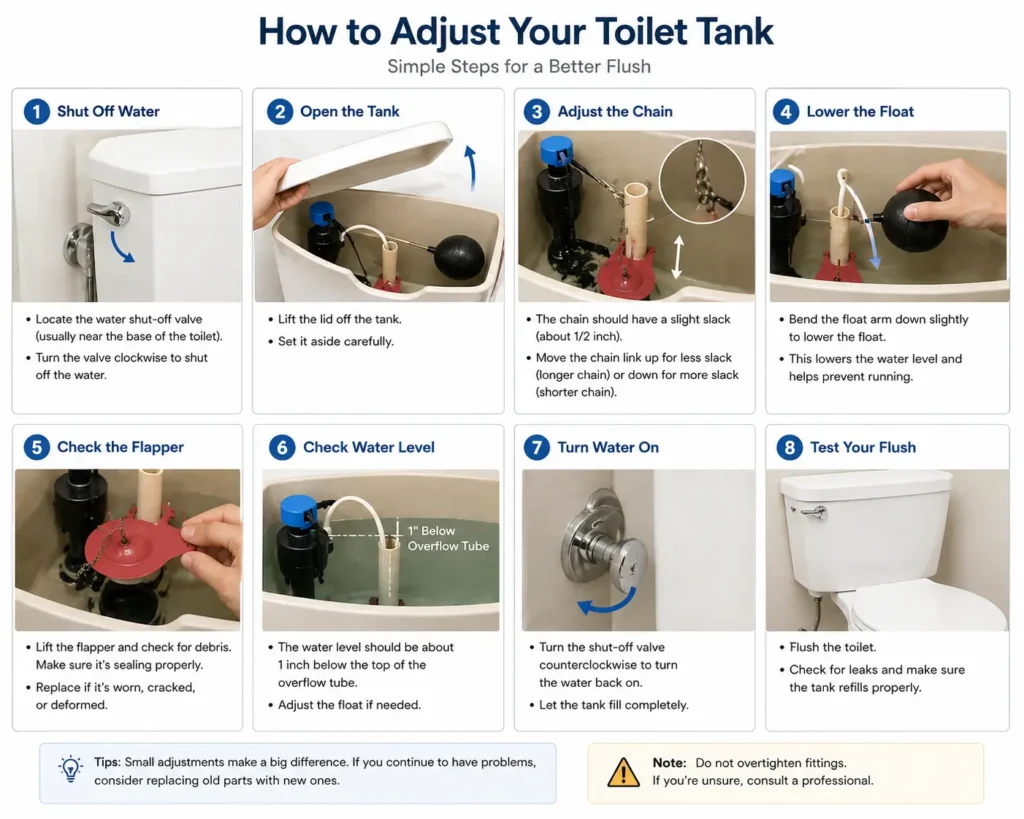
- Open the toilet tank.
- Check if the flapper closes tightly.
- Adjust the chain so it is not too tight or too loose.
- Lower the float if the water level is too high.
- Make sure the water stops about 1 inch below the overflow tube.
Quick tip: In most cases, these steps will stop the running water.
Why Is My Toilet Still Running After Flushing?
This is a common problem for homeowners and renters.
If your toilet stops when you jiggle the handle, the issue is usually small.
Most common causes:
- Loose or tangled chain
- Worn-out flapper
- Handle not returning properly
These parts control the water flow. When they fail, the toilet keeps running.
Tools You May Need
- Replacement flapper
- Adjustable wrench
- Rubber gloves
- Sponge or towel
- Food coloring for a dye test
Safety Tips
- Always turn off the water supply before starting a repair.
- Do not force plastic parts inside the tank.
- Avoid over-tightening small pieces, because they can crack.
- Keep a towel nearby in case water spills out.
Toilet Running After Flush: Easy Fix Tips
Start with simple checks. You can fix many problems in minutes.
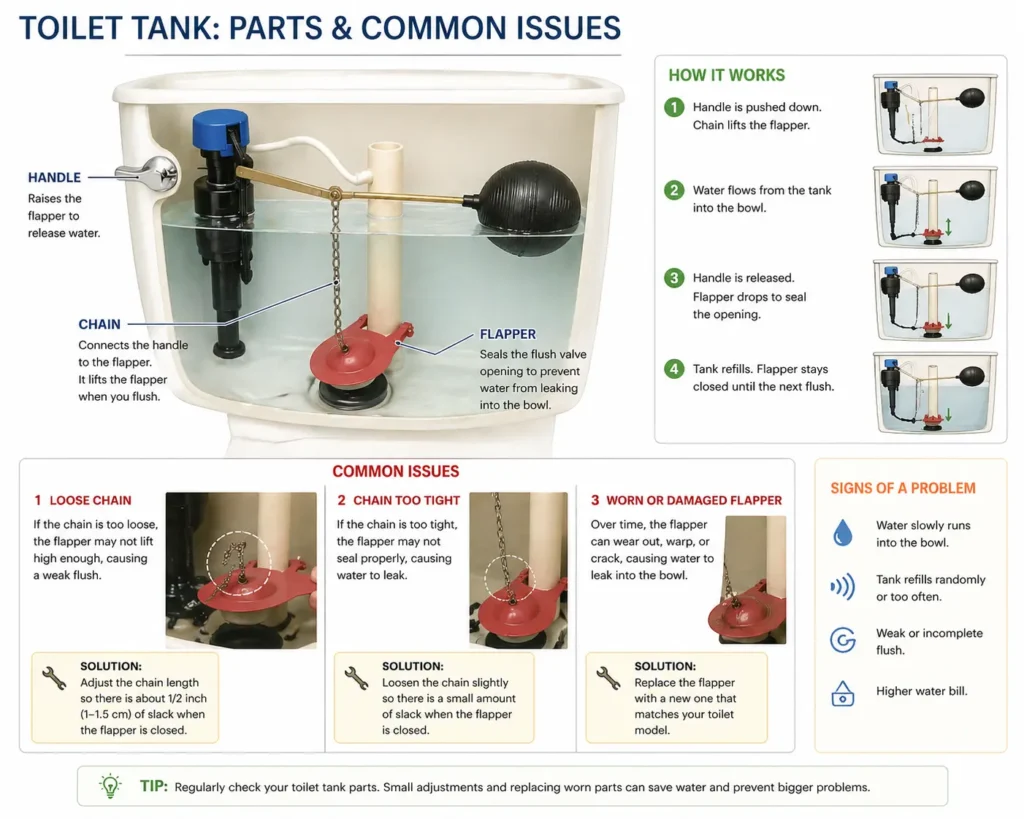
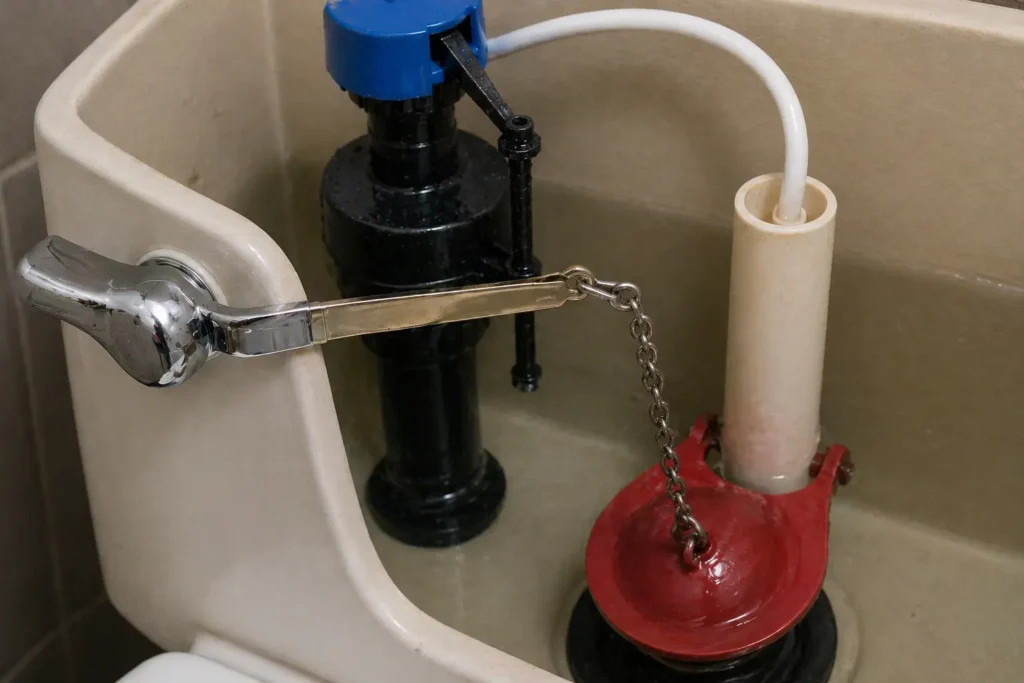
Step 1: Check the handle
First, press the handle slowly. It should move freely. If it sticks, adjust or tighten it.
Step 2: Check the chain
Next, look at the chain. It should have slight slack. If it is too tight, the flapper will not close.
Step 3: Inspect the flapper
Finally, check the flapper. It should seal the tank completely. If it looks worn, clean or replace it.
These simple steps often solve the problem without buying new parts.
How to Diagnose a Running Toilet
1. Is the toilet running all the time?
Check the flapper first.
2. Does it stop when you jiggle the handle?
Adjust the handle or chain.
3. Is the water level too high?
Lower the float.
4. Do you hear a hissing sound?
Inspect the fill valve.
Symptom-Based Diagnosis (Find the Problem Fast)
If you are not sure what is wrong, use this table:
This helps you fix the issue faster without guessing.
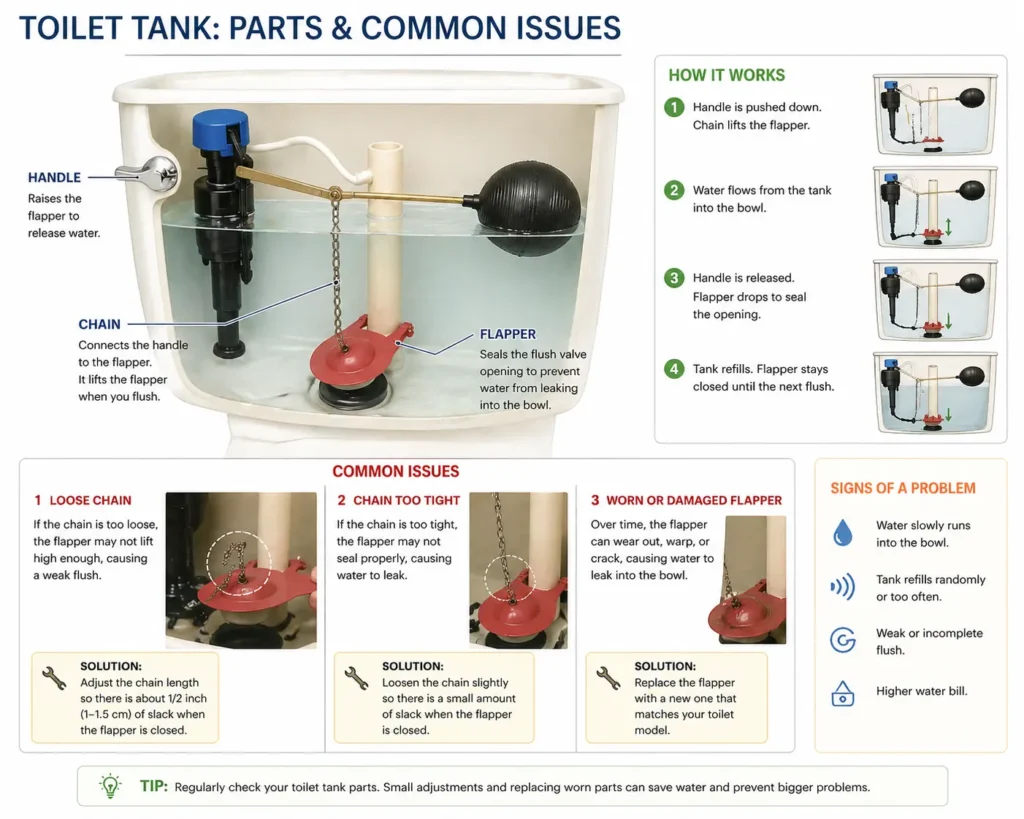
Check the Flapper and Chain (Most Common Fix)
In most homes, the flapper is the problem.
Signs of a bad flapper:
- Constant running water
- Tank refills again and again
- Quiet trickling sound
How to fix it:
- Turn off the water supply
- Flush to empty the tank
- Remove the old flapper
- Install a new one
- Reconnect the chain with slack
Simple Dye Test (No Tools Needed)
Add food coloring to the tank. Wait 10–15 minutes.
If color appears in the bowl, the flapper is leaking.
This test helps beginners confirm the problem.
Pro tip: If the dyed water shows up in the bowl after 10 to 15 minutes, the flapper is leaking even if the problem is not easy to see.
Check the Fill Tube
The fill tube controls water flow into the tank.
Common problems:
- Tube pushed too deep
- Tube too long
- Tube loose
Fix:
Place the tube above the overflow pipe. Do not push it inside.
Check the Fill Valve and Float
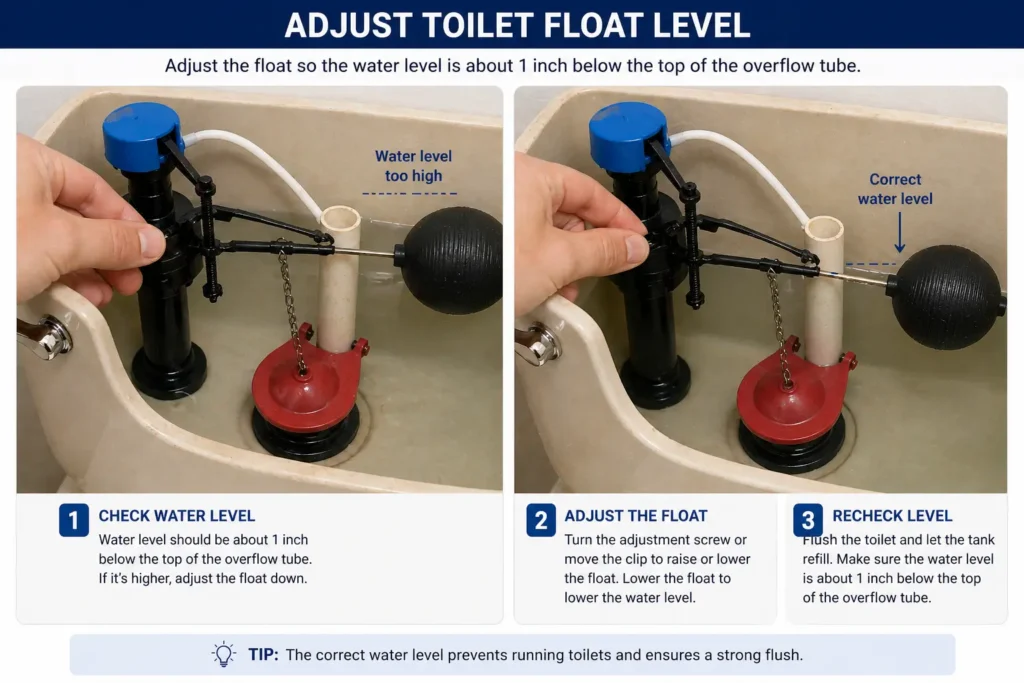
The fill valve refills the tank. The float controls when it stops.
Important: Water level should be about 1 inch below the overflow tube
Fix the float:
- Lower it to reduce water level
- Use the adjustment screw or clip
Fix the fill valve:
Replace it if:
- You hear constant hissing
- The tank fills slowly
- Water keeps overflowing
Fix a Running Toilet Without Buying Parts
Many people want a cheap solution. Good news—you may not need new parts.
Try these first:
- Clean the flapper
- Adjust the chain
- Lower the float
- Fix the handle alignment
These fixes are quick and free.
Common Mistakes to Avoid
- Setting the chain too tight so the flapper cannot close.
- Ignoring a high water level inside the tank.
- Replacing parts before checking the real cause.
- Pushing the fill tube too far into the overflow pipe.
How Much Can a Running Toilet Increase Your Water Bill?
A running toilet can waste up to 200 gallons of water per day.
This can:
- Increase your monthly bill
- Waste water
- Cost you more over time
Fixing it early can save money.
When Should You Call a Plumber?
Sometimes, the problem is bigger.
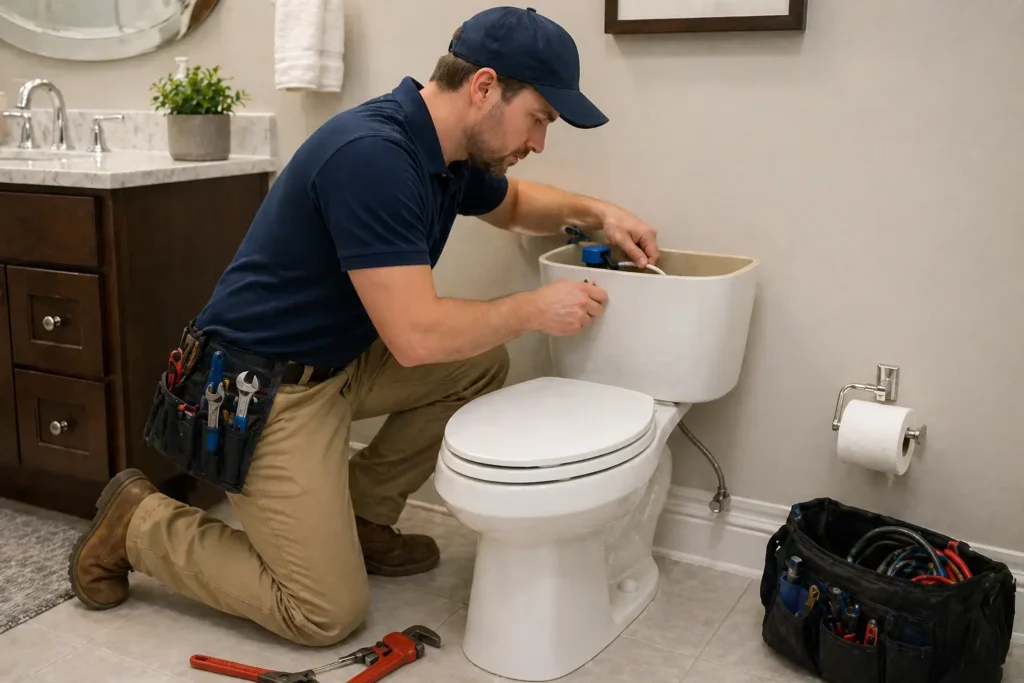
Call a plumber if:
- The toilet still runs after all fixes
- You see cracks in the tank
- Water leaks outside
Call a Plumber If:
- The toilet keeps running after you try all basic fixes.
- You notice cracks in the tank or bowl.
- Water is leaking onto the floor.
- You are not comfortable replacing internal toilet parts.
This helps avoid bigger damage.
Getting Started Is Easy
Fixing a running toilet is simple.
Start with small checks. Then follow the steps.
Most people can fix it in less than 30 minutes.
This saves money and avoids plumber fees.
Frequently Asked Questions
Why does my toilet run randomly at night?
This is called phantom flushing. It happens due to a slow leak in the tank.
Can a running toilet increase my water bill?
Yes. It can waste hundreds of gallons each day.
Is this problem urgent?
It is not dangerous. However, you should fix it soon to save water and money.
Can I fix this without tools?
Yes. Many fixes only need basic adjustments.
Conclusion
From my experience, fixing a running toilet is one of the easiest home repairs you can handle yourself. Most of the time, the issue comes down to a small part inside the tank, and a quick adjustment can solve it. By following the steps in this guide, you can stop the running water, avoid higher bills, and save money on plumber costs. If the problem does not go away, it is always safe to call a professional, but in many cases, you will be able to fix it on your own with confidence.
